
Search engines have set higher standards for credibility than ever before. In 2026, the websites that truly succeed are the ones that embrace a clear E-E-A-T SEO approach – demonstrating real expertise, authentic authority, and trust signals your visitors can see and feel. If you’re in healthcare, law, finance, or any industry where accuracy matters, trust isn’t just a bonus. It’s the line between sites that get noticed and those that fade away.
So what does this mean for you as a business owner or marketer? It’s easy to get distracted by new SEO tactics or think that publishing lots of articles will boost your rankings. But those days are over. Google’s algorithms are more advanced now, and your audience expects more, too.
People visiting your website today are much more informed than before. They want more than just information; they want reasons to trust you. They look for your team, your story, and proof that real people are behind your brand. Are you showing who’s on your team? Are you sharing real stories, not just perfect results? Are you ready to answer tough questions honestly instead of using unclear promises or buzzwords?
Transparency is now the key to building trust, and your website is usually where people look for it first. Don’t treat your About page or contact details as unimportant. Make it simple for visitors to find out who you are, what you believe in, and how to contact you. Show that you are open, easy to reach, and truly interested in helping them, not just making a sale.
SEO in 2026 is less about marking boxes and more about building SEO in 2026 is about building real relationships, not just following a checklist. When someone visits your website, they should feel like they’re getting advice from a trusted expert, not just reading a sales pitch. This change in approach is what helps successful brands stand out today. It’s about demonstrating that you deserve visibility.
Why E-E-A-T Is the Foundation of Modern SEO
When discussing E-E-A-T in SEO 2026, we refer to Google’s evolving approach to evaluating content quality and website credibility. E-E-A-T stands for Experience, Expertise, Authority, and Trust. The additional “E” for Experience has significantly changed how Google evaluates content creators and businesses.
Google now looks beyond keywords. It evaluates:
- Who created the content?
- Whether the creator has real-world involvement
- Whether the website has industry recognition
- Whether users can trust the information provided
This means a website cannot rely solely on surface-level blogs or AI-generated articles. The entire website ecosystem must reflect credibility.
What Google Officially Expects
Take a look at Google’s E-E-A-T guidelines, and you’ll see a clear message: transparency and accountability aren’t optional anymore-they’re essential. Google wants proof that your website is run by real people with real expertise, especially in areas such as health, finance, or law. If your articles are created or reviewed by qualified experts and you’re upfront about who they are, you’re already ahead of the curve. This honesty isn’t just for Google’s algorithms-it’s for your visitors, too. When people see the names and qualifications behind your advice, they feel more confident trusting your site.
- Here’s exactly what Google wants to see:
- The author’s name is easy to find
- Credentials are visible and relevant.
- Information is clear and based on facts.
- The website is safe to browse
- Contact details are transparent and easy to access
If your website doesn’t include these details, you’re making it harder for both people and search engines to trust you. These aren’t just boxes to check-they’re what make your site feel legitimate and reliable.
Breaking Down the Four Pillars
Let’s break down these pillars in a way that’s simple, practical, and easy to apply – no jargon, just advice that actually helps.
1. Experience
Experience means rolling up your sleeves and doing the real work – not just reading about it. For example, if you run a medical clinic and you’re writing about laser piles treatment, don’t just stick to what the textbooks say. Tell real stories from your patients, explain what people can expect during the procedure, and be honest about what recovery feels like. The more you share real-life details and answer the questions people genuinely have, the more your content will feel trustworthy and relatable. That’s what both Google and your readers are looking for.
2. Expertise
Expertise is all about having the right background and training. In healthcare, this means a qualified doctor has written or checked the article. Let your readers know who your experts are and why they can be trusted – it’s important for both your audience and your rankings.
Expertise becomes visible when:
- Credentials are clearly mentioned.
- Professional bios are available.
- Certifications are displayed
- Industry affiliations are highlighted.
If your website doesn’t show real expertise- especially in fields like medicine- it’ll be tough to stay visible online. People want to know that the advice they’re reading comes from someone who truly knows their stuff. The same goes for search engines. That’s why it pays to work with qualified writers, experienced professionals, and to keep your content regularly reviewed by experts.
3. Authority
Authority is not something you claim. It is something others recognise.
Authority is built through:
- Mentions in reputable publications
- High-grade backlinks
- Industry awards
- Media coverage
- Cooperations and collaborations. When respected websites or news outlets mention your clinic or practice, it’s a real sign that others trust your expertise. Google pays close attention to these third-party signals – they mean your authority is recognised beyond your own claims.
4. Trust
Trust is the final- and most important-pillar. It’s what separates a site people glance at from one they keep coming back to.
Trust signals include:
- HTTPS security Clear data protection policy
- Honest claims, Authentic reviews
- Visible business information
If you don’t have trust, even the best expertise and authority won’be enough. Earning trust is what turns someone browsing your site into a loyal patient or customer. You build it with honesty, clear information, and always putting your audience’s needs first.
When we talk about experience, expertise, authority, trust, and SEO, we’re outlining a complete framework that boosts both user assurance and how search engines recognise your site.
Why Traditional SEO Tactics Are Losing Power
For a long time, SEO was all about stuffing pages with keywords and chasing as many backlinks as possible. But that way of doing things doesn’t work like it used to.
Now, E-E-A-T SEO is about building a real reputation, not gaming the system. Search engines have gotten much smarter- they can tell when content is too thin, when articles are overloaded with keywords, when text just repeats itself, or when marketing claims are exaggerated. Sites that depend on aggressive shortcuts usually end up with rankings that bounce all over the place.
If you want your rankings to stick, you can’t rely on shortcuts or whatever the latest trend is. What really makes a difference is building your SEO on trust – being genuinely credible, communicating honestly, and showing the real, human side of your business. That’s what keeps you ahead, even when Google’s algorithms keep changing.
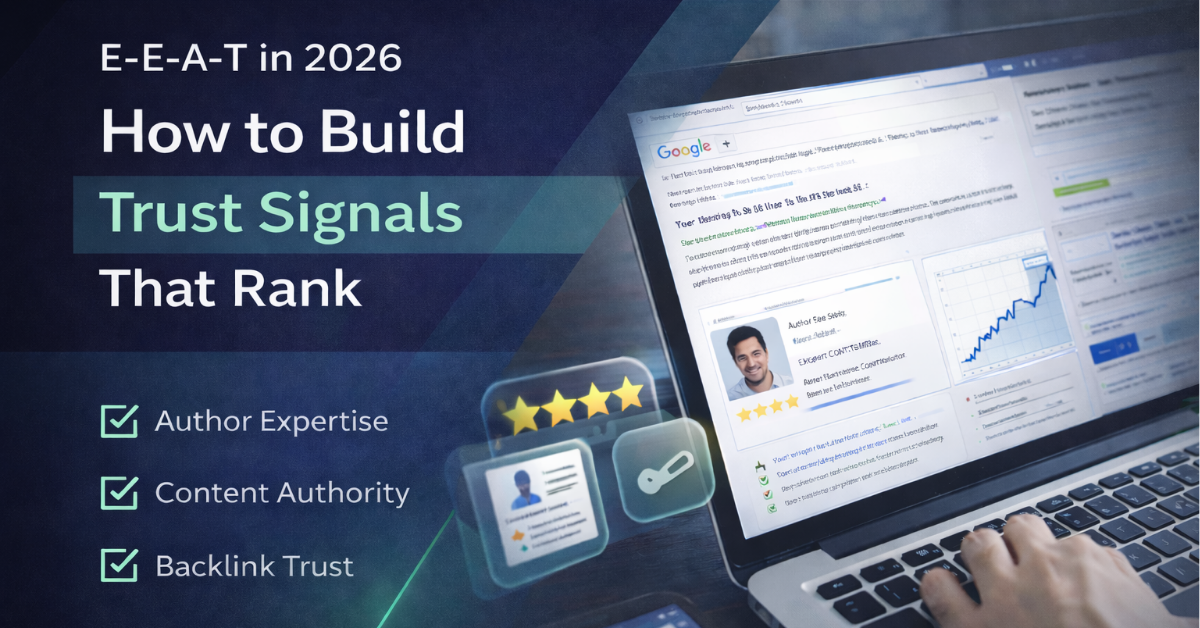
How to Build Trust Signals That Actually Rank
Let’s turn these ideas into simple, real-world actions you can use right now. It doesn’t matter if you’re running a small clinic, growing a healthcare brand, or building any business that wants to earn long-term trust- this is where you begin.
1. Show Real Authors and Reviewers
Each article should clearly show who’s responsible for the content. At a minimum, include:
– Author name
– Professional background- Credentials
– A short bio – A LinkedIn or profile link if possible
If your blog posts and articles don’t include a real person’s name, your website can seem impersonal or even untrustworthy. But when you show your authors and their credentials, it adds reliability and shows visitors that you support your content.
2. Strengthen Core Pages
Your About page goes beyond being a formality – it’s your opportunity to tell your story and build trust. Share how long you’ve been in business, introduce the team by name, and talk about your mission, values, accreditations, and achievements. The more real and particular you are, the more visitors will trust you.
On your Contact page, make it as easy as possible for people to contact you. List your full address, phone number, email, and working hours, and include a Google Maps link so visitors can find you easily. All these details not only help your users but also show Google that your business is legitimate and transparent.
3. Publish In-Depth Topic Clusters
Instead of writing one article per topic, build depth around it.
For example, if your niche is piles treatment:
- Symptoms guide
- Treatment comparison
- Recovery expectations
- Preventive lifestyle advice
- FAQs
- Cost-related discussion
When you cover a topic in detail, answering all the questions people actually have, you show that you really know your stuff. A deep content cluster isn’t just good for Google- it helps patients and users feel reassured, informed, and confident in your expertise.
4. Earn Real Backlinks
Focus on quality, not just quantity, when it comes to backlinks. Getting your site mentioned in reputable industry directories, medical portals, news features, guest articles, and research publications can go a long way. Just a handful of strong backlinks is worth far more than dozens of low-quality ones.
5. Encourage Genuine Reviews
Online reviews are today’s word-of-mouth. Encourage your happy patients or clients to leave feedback on Google, healthcare directories, or other verified platforms. When people see honest reviews from real customers, it goes a long way toward building trust and showing that your business keeps its promises.
6. Improve Technical Reliability
Trust isn’t just about your content- it’s about the whole experience people have on your website. Make sure your site loads fast, works smoothly on phones and computers, is securely hosted, has no broken links, and uses structured data. Even small technical problems can make visitors second-guess your reliability, so keep everything running well.
7. Maintain Balanced Messaging
Don’t make sweeping promises you can’t fulfil, like “guaranteed permanent cure,” “instant results,” or “zero risk procedure.” This is especially important in fields like healthcare and law, where people are looking for honesty and reassurance. By keeping your messaging clear and realistic, you help visitors feel respected and safe- and that’s how you earn real trust.
Measuring E-E-A-T Impact
E-E-A-T does not produce overnight ranking jumps. It builds over time.
You can measure improvements through:
- Increased branded searches
- Improved average session duration
- Lower bounce rates
- Growth in organic backlinks
- Steady keyword ranking stability
E-E-A-T is similar to building a reputation in real life. It takes time, but the results add up. The more you invest in credibility, transparency, and real expertise, the stronger your brand’s foundation will be.
The Shift from Pages to Entities
Google isn’t just looking at your web pages anymore; it’s looking at your whole brand as a single, trusted entity. If you keep publishing content from real experts, get mentioned in the media, and show strong trust signals, Google starts to see your entire domain as an authority.
Here’s what really matters: Don’t waste energy chasing every new SEO trend. Focus on making your brand known for genuine expertise, honesty, and a real commitment to helping your audience. That’s what will put you ahead of your competitors for the long haul.
The Future of Ranking Is Reputation
As we move further into 2026, SEO will continue to correspond with brand reputation. Search engines aim to protect users from misinformation and unreliable sources.
Businesses that invest in:
– Professional transparency
– Educational content
– Authentic reputation
– Ethical communication
will enjoy steady, long-term visibility.
On the other hand, those who are always searching for shortcuts will have a hard time keeping up.
Conclusion
E-E-A-T is no longer only a suggestion. It’s the foundation for ranking in competitive industries. The brands that succeed are those that can show, every day, that they have real experience, true expertise, industry recognition, and clear trust signals. These are more than mere buzzwords; they are the basics of lasting online success.
Building trust online is a lot like building trust in real life. You can’t just appear once and expect people to believe in you. You need to be consistent, show your expertise, and back up your promises with real proof. This means putting in effort every day, whether you’re answering questions, publishing new articles, or updating your credentials.
For businesses focused on enduring growth, working with a partner like Digital Catalyst can make a real difference. Rather than chasing the latest SEO tricks, we help you build a strong foundation with credibility systems, careful content planning, and concentration on your reputation. It’s more than about being seen tomorrow; it’s about staying visible, trusted, and relevant for years.