
Real estate has changed dramatically over the past decade. Instead of calling brokers or flipping through newspaper ads, most people now start their property search online—scrolling through Google, Instagram, and specialised real estate websites. This shift means developers can’t rely on the same old marketing tricks. They need to be visible where buyers are actually searching.
A winning Real estate digital marketing strategy in 2026 is about more than just being online—it’s about reaching the right people and supporting buyers as they consider their options. Developers who skip digital marketing will quickly fall behind competitors who are active and easy to find. Today’s buyers expect plenty of details, clear images and videos, and fast answers to their questions before they even think about visiting a property. The friendlier and more accessible developers can make this experience, the easier it is to build trust and connect with serious buyers.
Digital marketing has become one of the best tools for real estate developers. It allows them to connect with the right people, highlight what makes their projects valuable, and build trust with buyers.
The Changing Behaviour of Property Buyers
Knowing how buyers behave is key to any marketing plan. Today’s buyers are well-informed and active online. Before reaching out to a developer, they often research several projects, compare prices, consider locations, and read online reviews.
A strong real estate digital marketing strategy is about being present for buyers at every step, not just showing up when it’s time to close a deal. It means being there from the moment someone starts looking for a home, all the way through their decision-making process. With digital tools, developers can reach out to interested buyers with the right message at the right time—answering questions, offering helpful information, and making the experience feel personal and supportive.
Some things today’s property buyers often do are:
- Look up properties on Google
- Watch videos and walkthroughs of projects
- Compare different developers online
- Read reviews on social media
- Research if a property is good for investment
Since buyers collect so much info before getting in touch, it’s important for developers to make their online presence easy to understand, honest, and genuinely helpful.
Key Trends Shaping Real Estate Marketing in 2026
Real estate marketing in 2026 is shaped by new technology and changing customer expectations. Developers who keep up with these trends can promote their projects more successfully.
Artificial Intelligence in Property Marketing
AI is increasingly used to analyse customer behaviour and personalise marketing messages. Chatbots, predictive analytics, and automated responses help developers interact with potential buyers instantly. This improves customer experience while reducing manual workload for sales teams.
Video-First Content Strategy
These days, videos are one of the best ways to promote real estate. People enjoy watching quick clips or reels that highlight amenities, show off interiors, and give a sense of the neighbourhood. Using things like drone views, real-life stories, and step-by-step walkthroughs can make buyers feel more connected and interested.
Hyper-Targeted Advertising
With digital ads, developers can reach the exact people they want—sorted by income, location, interests, or even browsing habits. This way, marketing money is spent wisely, and the message lands with those who are most likely to care.
Virtual and Augmented Reality
Virtual tours make it easy for buyers to check out properties from anywhere, without needing to visit in person. This is a big plus for NRIs and out-of-town investors who want a real feel for the place before making a decision.
Influencer and Community Marketing
Influencers, architects, financial experts, and lifestyle bloggers now work with developers to promote projects. Their recommendations can shape how buyers see a project and help build trust.
These trends are changing the way developers connect with buyers and spark interest in their projects.
Building a Strong Marketing Strategy for Real Estate Developers
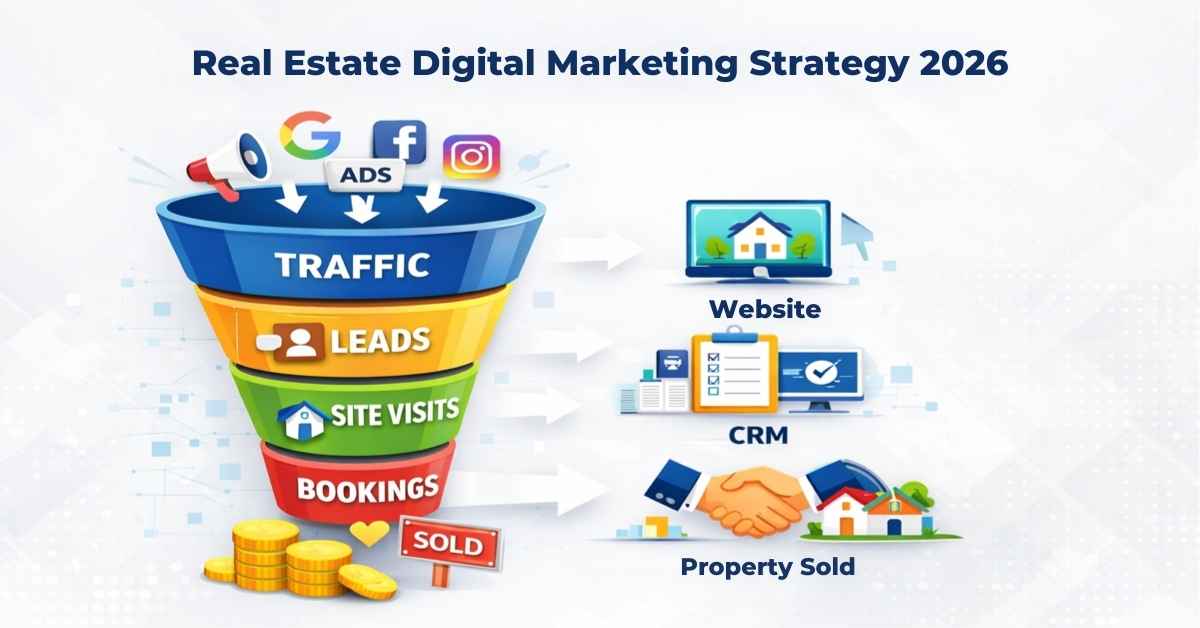
A successful Marketing strategy for real estate developers must focus on three key objectives: visibility, lead generation, and conversion. Marketing activities should follow a structured funnel that guides potential buyers from awareness to purchase.
-
Project Branding and Positioning
In real estate, there are always plenty of options for buyers to choose from. That’s why good branding is so important—it’s what makes one project catch someone’s eye and feel special. When branding is done right, it shows what’s unique about a project and helps people remember it.
Branding covers things like:
- The project’s name and personality
- The promise or value it offers
- The look, feel, and style of the design
- The kind of lifestyle it represents
If a project can clearly show what sets it apart, buyers are much more likely to take notice and want to learn more.
-
High-Performance Real Estate Website
Think of your project website as your always-open digital sales office. It’s the first place most buyers go when they want to learn more, so it should be welcoming and packed with useful details that help people make decisions. Your website should feel welcoming and simple to use. Visitors want to quickly find answers and feel encouraged to take the next step.
Here’s what makes a real estate project website genuinely useful for buyers:
- Show off what’s best about your project, and keep all the important details at their fingertips. People appreciate clear, easy-to-read information.
- Make it easy for visitors to explore floor plans and layouts, so they can picture themselves living there.
- Provide honest, clear details about the location, nearby schools, transport options, and other important factors buyers want to know.
- Give a full rundown of the amenities and facilities future residents can expect.
- Keep the site fresh with regular updates on construction progress, so buyers know what’s happening.
- Add real reviews and testimonials from happy buyers to help build trust and credibility.
Also, ensure your website loads quickly, looks great on mobile devices, and is easy for people to find through search engines like Google.
-
Search Engine Optimisation (SEO)
SEO helps your project get found by people who are actively searching for properties online. If your website appears at the top of search results, you’ll attract visitors who are already interested in buying.
Some important things to focus on for SEO are:
- Using the right keywords that buyers are searching for
- Creating landing pages for specific locations
- Publishing helpful blog posts that answer buyer questions
- Making sure your website loads fast and works smoothly
- Optimising your site for local searches
By investing in SEO, you keep your project visible online and don’t have to rely only on paid ads to get noticed.
-
Paid Advertising for Immediate Lead Generation
Paid ads help developers quickly reach interested buyers and increase inquiries right away.
Here are some of the best channels for real estate ads:
- Google Search Ads help buyers find your properties when they’re actively searching online
- Facebook and Instagram ads reach people where they spend time and work well for collecting leads
- YouTube video ads let you showcase your project’s story and features
- Retargeting display ads remind people who’ve already visited your website to come back
You’ll see the best results when you combine paid ads with creative content and easy-to-use landing pages that clearly explain your project.
-
Social Media Engagement
Social media isn’t just for advertising—it’s a powerful way to connect with people who might be interested in your project. It goes beyond posting ads. Use your channels to share real stories, behind-the-scenes updates, and give buyers a genuine sense of what your project is all about.
Here are a few ideas for what to post:
- Photos and videos that show how construction is coming along—so buyers can track progress in real time
- Scenes from the lifestyle and unique amenities your project offers
- Honest, personal testimonials from people who’ve already bought homes. Practical tips and real insights about the real estate market or the home- buying journey
Being consistent matters. When you share authentic, engaging content regularly, you don’t just stay visible—you build trust with potential users over time.
-
Lead Management and CRM Automation
Buying real estate is a big decision, and most people don’t rush into it. That means developers need to stay in touch with buyers over time, or they risk losing out on potential deals.
A good CRM system makes this much easier. It keeps track of every inquiry and helps you automatically follow up with buyers so no one slips through the cracks.
Some ways a CRM can help:
- Sending follow-up emails
- Sending WhatsApp notifications
- Reminding buyers with SMS messages
- Scheduling appointments with interested buyers
With the right automation, buyers always receive quick, personal responses. This helps you build trust and move them closer to making a decision.
-
Data Analytics and Campaign Optimisation
One of the best things about digital marketing is that you can actually see what’s working. Developers can look at numbers like:
- How many people visit your website
- How much does it cost to get a new lead
- What percentage of leads turn into buyers
- How well your ads or campaigns are performing
With these insights, you can tweak your strategy, adjust your budget, and make sure you’re spending money where it matters most.
The Role of Content Marketing in Real Estate
Content marketing is a key part of real estate marketing. Rather than just promoting, developers should create content that teaches buyers and builds trust.
Examples of useful content include:
- Property investment guides
- Location development updates
- Real estate market insights
- Home buying tips
Educational content draws in potential buyers while they are researching and helps developers be seen as industry experts.
Importance of Local SEO for Real Estate Projects
Local SEO is important for helping buyers find projects in specific areas. Most buyers look for properties in certain neighbourhoods, not across whole cities.
By optimising local listings, Google Business Profiles, and location pages, developers can show up in map searches and local results.
Customer reviews and ratings also influence purchasing decisions. Developers with strong positive reviews often receive higher inquiry volumes.
Marketing to NRI Property Investors
NRIs represent a growing segment of property buyers in India. Many overseas investors seek opportunities to invest in residential and commercial properties due to favourable exchange rates and long-term appreciation potential.
Digital marketing enables developers to reach NRI audiences through:
- International Google advertising
- LinkedIn marketing campaigns
- Virtual property presentations
- Dedicated NRI investment landing pages
These strategies help developers reach buyers outside of the local market.
Future Outlook for Real Estate Digital Marketing
Real estate marketing will keep changing as technology and data become more important. Developers who adapt quickly will have an edge over the competition.
New technologies like artificial intelligence, virtual experiences, and predictive analytics will change how developers connect with potential buyers.
Companies that set up strong digital marketing systems now will lead the real estate market in the future.
Conclusion
Real estate marketing today needs a smart, data-driven approach. Developers should go beyond traditional ads and use digital platforms to reach buyers more effectively.
A strong digital marketing plan helps developers get quality leads, build a trusted brand, and speed up property sales. By using SEO, paid ads, social media, and automation together, developers can build a marketing system that keeps their business growing steadily. To stay ahead in today’s fast-moving market, it’s important to keep an eye on new trends and really listen to what buyers are looking for. Sharing things like virtual tours, practical blog posts, and real customer reviews makes it easier to connect with buyers and earn their trust. Quick follow-ups and personal communication also help move leads through the sales process and boost conversion rates. Using data analytics lets developers improve their campaigns, spend their budget wisely, and find the best ways to reach their audience. Taking a proactive approach to digital marketing leads to long-term growth, stronger brand loyalty, and a steady flow of qualified buyers.
Working with experienced digital marketing experts, like Digital Catalyst, helps real estate developers create and carry out strategies that boost visibility, engagement, and sales in a competitive market.